Eased procedures fuel interest in adult adoption, but it does not automatically grant Korean nationality or residency
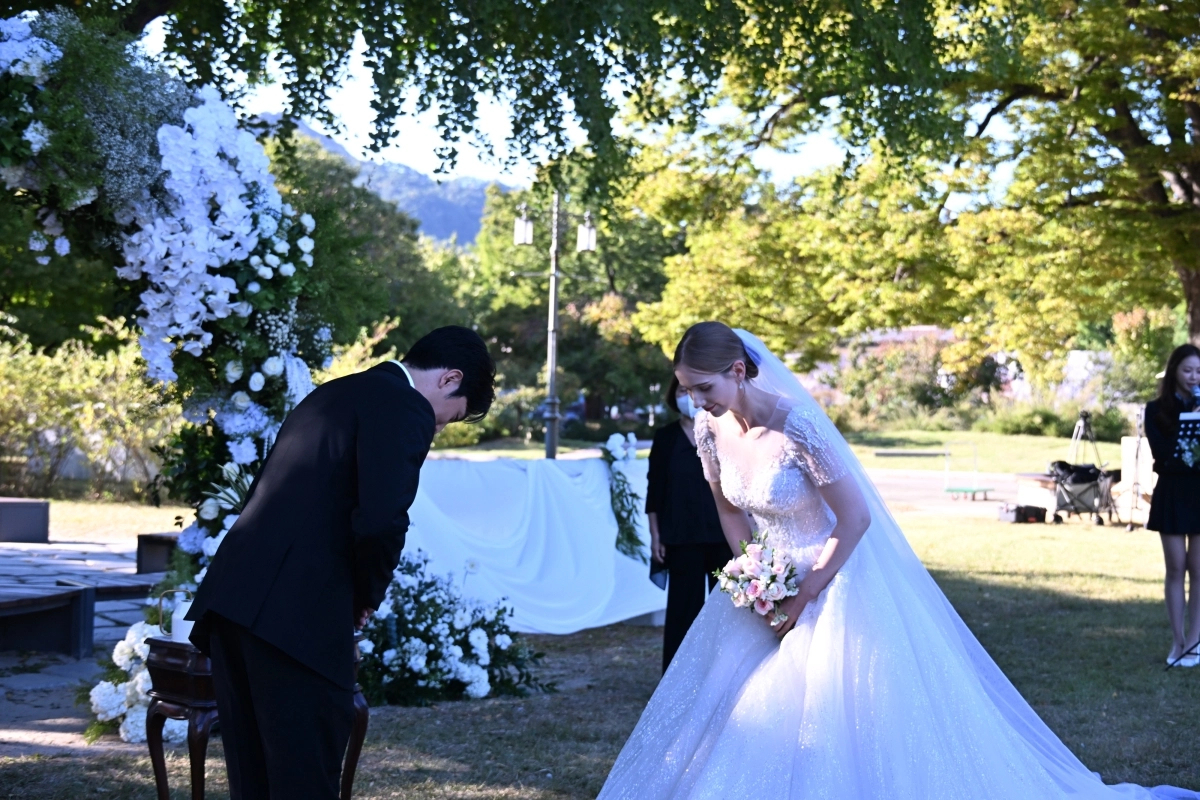
Just three months after marrying his Vietnamese wife, Han, a 45-year-old South Korean man, became the father of a 21-year-old.
Han recently adopted his wife's adult son from a previous marriage, who had been living in Vietnam.
The adoption process turned out to be much simpler than Han had expected.
He simply submitted an adoption registration form, along with the child's passport, birth certificate, written consent from the biological father and other paperwork, to a local district office.
Within days, the adoption was recorded in the family registry.
"Unlike the adoption of foreign minors, which requires approval from a family court, adult adoption is relatively straightforward because it generally only requires administrative registration," said Song, a licensed administrative agent based in Cheonan, South Chungcheong Province, who shared Han's case in an interview with The Korea Herald.
In South Korea, international marriages are increasingly followed by the adoption of foreign spouses' children from previous marriages.
According to data from the Ministry of Justice, the country recorded 21,399 multicultural marriages last year.
While the ministry does not maintain separate statistics on adoptions of foreign adults, industry sources say they are seeing an increase, with some families deliberately waiting until their children reach adulthood to avoid the more complicated procedures required for adopting minors.
The government tightened international adoption procedures for minors in July last year, with the stricter rules applying to both Korean children adopted abroad and foreign children adopted into South Korea.
Previously, international adoptions of minors were largely handled by private adoption agencies, with family court approval required.
Under the new system, the government oversees the process, including assessments of prospective adoptive parents through interviews and home visits, as well as monitoring the child's adjustment for one year after adoption.
For adoptions of foreign minors into Korea, both countries' authorities are required to coordinate the process.
"The adoption of minors is subject to strict scrutiny. Even in a case involving grandparents seeking to adopt their own grandchild, the Supreme Court emphasized that the child's best interests must take priority," said Yoo Soo-bin, an attorney at law firm Yusu.
"Adult adoptions, by contrast, generally proceed through administrative registration once the parties reach an agreement and obtain the necessary consent, without undergoing the same child protection reviews."
Yet adopting a foreign adult is not always straightforward, as obtaining consent from biological parents can be difficult depending on the adoptee's nationality.
Yoo said parental consent may be waived if a parent's whereabouts is unknown and consent cannot be obtained.
"If a biological parent refuses to consent without justifiable grounds, the prospective adoptive parent or adoptee can petition a family court for a ruling allowing the adoption to proceed without that parent's consent," she added.
A more secure life together
Adoption does not automatically grant foreign adult children Korean citizenship.
After adoption, they may reside here on a visa suited to their circumstances, such as a student visa, while they work on meeting the residency and other requirements needed to apply for Korean citizenship through naturalization.
Still, the possibility of qualifying for simplified naturalization makes adult adoption an appealing option for some multicultural families.
Under South Korea's Nationality Act, foreign nationals seeking ordinary naturalization must have lived in the country for at least five consecutive years and obtained permanent residency status before applying for citizenship.
But foreign adults adopted by Korean nationals can apply for simplified naturalization after just three years of residence, Yoo explained.
"They must still meet other requirements, including good conduct, financial stability and Korean language proficiency, but they do not need to obtain permanent residency first," Yoo said.
Concerns over residency status and hopes for better opportunities in Korea are among the factors driving foreign spouses to seek adoption of their adult children.
"For parents from less economically developed countries, Korea's global cultural influence, strong emphasis on education and economic opportunities can make it an attractive place for their children to build a future," Song said.
According to Kwon Hyuk-sung, managing attorney at Kwon & Partners Law Office, who shares legal information for foreigners on Instagram, the relatively simple process of ending an adult adoption by mutual consent adds to its appeal for families.
"While dissolving the adoption of a minor requires court proceedings, adult adoption can be terminated simply by mutual agreement between the adoptive parents and the adoptee, followed by filing a report with a local district office," Kwon said, citing Article 898 of the Civil Act.
Risk of misuse
Despite the genuine intentions behind many adoptions, concerns remain that the process could be exploited for immigration purposes.
In September 2021, the Busan Family Court rejected a Korean man's request to adopt his foreign wife's son, who was a minor, finding that the adoption appeared to be aimed primarily at securing residency status for the child rather than establishing a genuine father-son relationship, according to news reports.
Some foreign workers have also sought adoption by Korean business owners in hopes of securing more stable residency status.
Jang Seung-hyun, a licensed administrative agent at Good Friends Administrative Agent Office, recounted a recent case in which a Korean scrap metal dealer and a Pakistani worker visited his office to inquire about arranging an adoption.
The worker had been required to renew his visa every few months but was struggling to extend his stay further. He was therefore considering being adopted by someone associated with the Korean business, Jang explained.
However, the visitors mistakenly believed that adoption would automatically grant the worker residency status.
Jang said he has recently encountered a growing number of foreign workers seeking advice after coming across misleading information online.
"Lawyers and licensed administrative agents should make it clear during consultations that adoption alone does not guarantee the right to stay in Korea," he said.
Sham adoptions involving foreign nationals, whether minors or adults, can result in criminal penalties in South Korea. Under the Criminal Act, those who make false adoption reports can face up to five years in prison or a fine of up to 10 million won ($7,500).
Such adoptions may also be declared invalid, while foreign nationals could face immigration-related penalties, including the cancellation of residence permits, deportation or revocation of naturalization.
Kwon noted that stricter immigration screening could help prevent the adoption process from being exploited, but warned that it could also lead to legitimate applications being rejected.
"Immigration screening is an administrative process rather than a judicial one, so it is inevitably influenced by government policy. The government could direct immigration authorities to tighten screening requirements to prevent abuse, but identifying fraudulent cases is not easy," he said.
"Multicultural families are already a common part of Korean society and are likely to become even more prevalent. It is important to strike a balance between preventing abuse and ensuring that legitimate families are not unfairly stigmatized because of a few cases."
cjh@heraldcorp.com